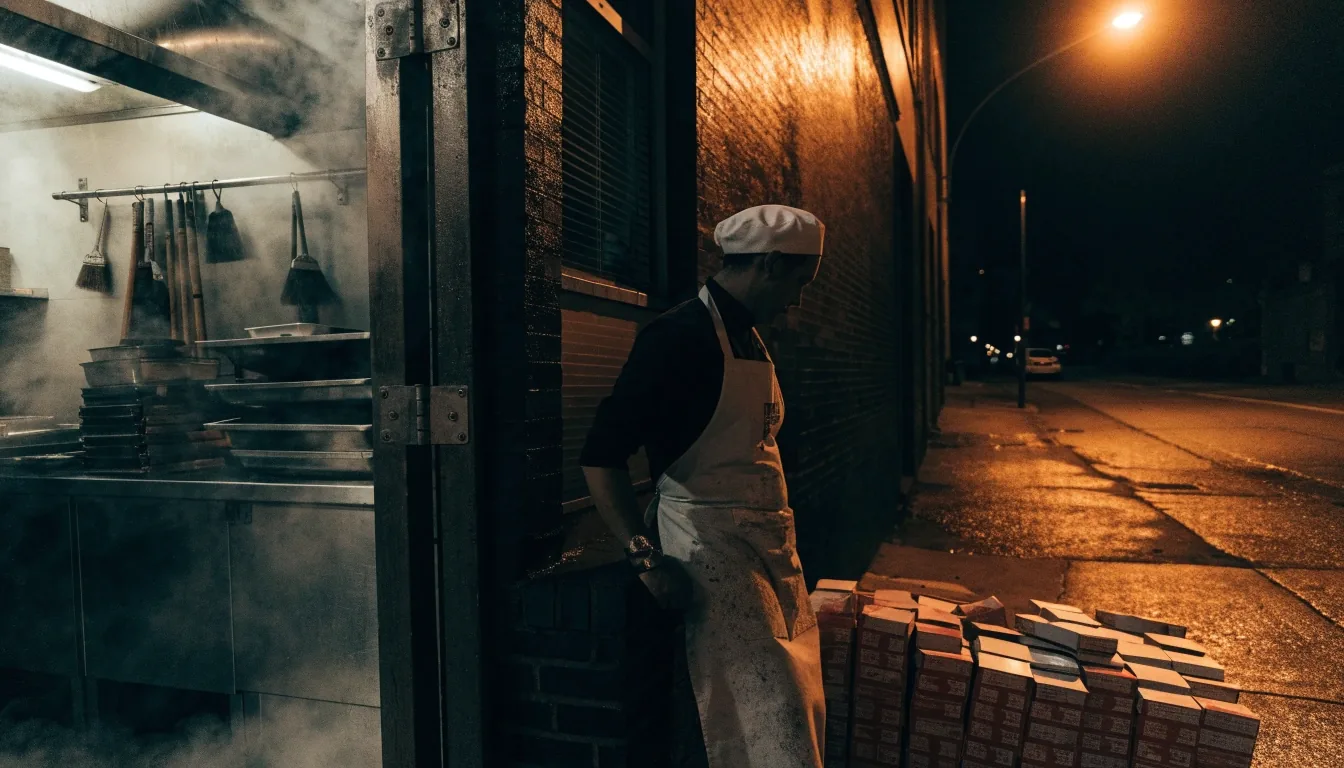
422 Broadway, Nashville — where the course was written
The chef behind the course
About Dave
Dave cooks Nashville hot chicken the way the neighbourhood shops do it — brine overnight, dredge by hand, glaze hot. This page is about the years behind that habit, and why every lesson in the course is written from the line, not from a cookbook.
From the fryer line to your kitchen
Dave started cooking daves chicken in Nashville kitchens where the fryer ran from open to close and the heat levels were argued about more than the score of a Titans game. Those kitchens taught a simple thing: the difference between decent tenders and restaurant-grade ones is almost never the sauce. It is the brine, the dredge, the oil temperature, and how fast the glazed piece reaches the plate.
The course collects that line experience into a format a home cook can follow. No professional range required, no mystery ingredients, no six-hour prep you cannot fit into a Tuesday. Every module assumes one stovetop, one heavy pan or countertop fryer, and an appetite for heat you can dial from Mild to Reaper yourself.
What the kitchens taught
The first thing you learn on a hot chicken line is respect for the brine. Salt, buttermilk, a little sugar, and time do more for a tender than any breading trick. Dave's recipes lean on an overnight soak because it forgives a busy schedule and it keeps the meat juicy when the oil runs hot.
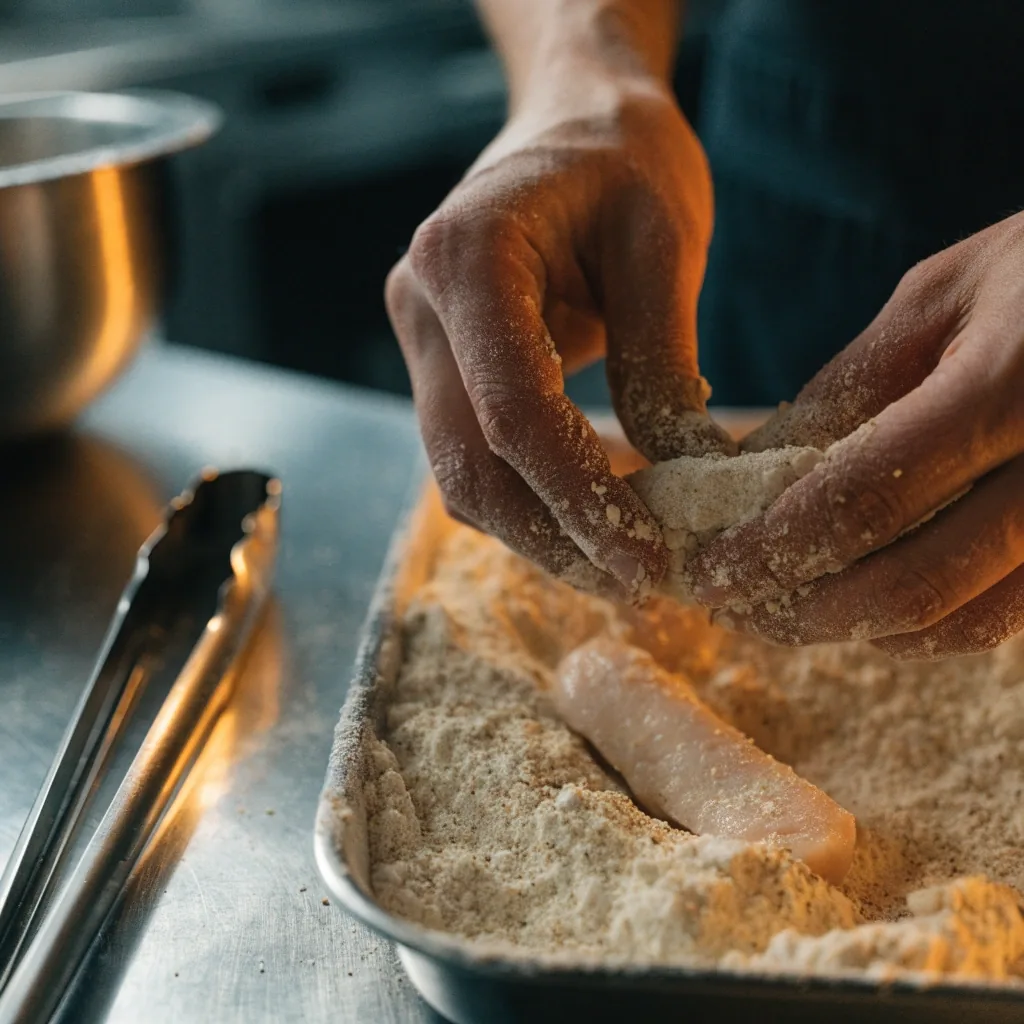
The second lesson is dredge discipline. Two passes through the flour, a short rest, and a hard shake before the basket — that is what builds the craggy crust that holds glaze instead of sliding off it. Dave shows the texture to look for, because it is easier to recognise by eye than to describe.
The third is heat management. A home pan drops twenty degrees the second a cold tender lands in it. The course walks through how to hold temperature without a professional thermostat, how to batch so the oil recovers, and how to tell when the crust is set before you ever reach for the thermometer.
How the course is put together
Dave did not record a demo and call it a course. Each module was rebuilt around the mistake he sees most often in home kitchens, then filmed in a real one so the results are repeatable on ordinary equipment.
Choosing and breaking down the bird
What to look for at the counter, why tender size decides cook time, and how to trim a breast into even strips so nothing dries out while the thick pieces catch up.
Brine, dredge and breading
The overnight soak, the two-pass flour technique, and the short rest that gives the crust its shaggy edge. Dave covers what to do when the coating clumps, and how to fix a batch that is already in the tray.
Spice blends and heat levels
How the same base blend carries a piece from Mild to Reaper by changing ratios, not by dumping in more chili. You build your own house blend and learn where the heat actually lands on the tongue.
Home fryer and pan setup
Oil choice, pan depth, safe batching, and how to hold temperature on a domestic burner. Includes the shallow-fry route for anyone who would rather not keep a countertop fryer in the kitchen.
Four modules, filmed end to end in a home kitchen.
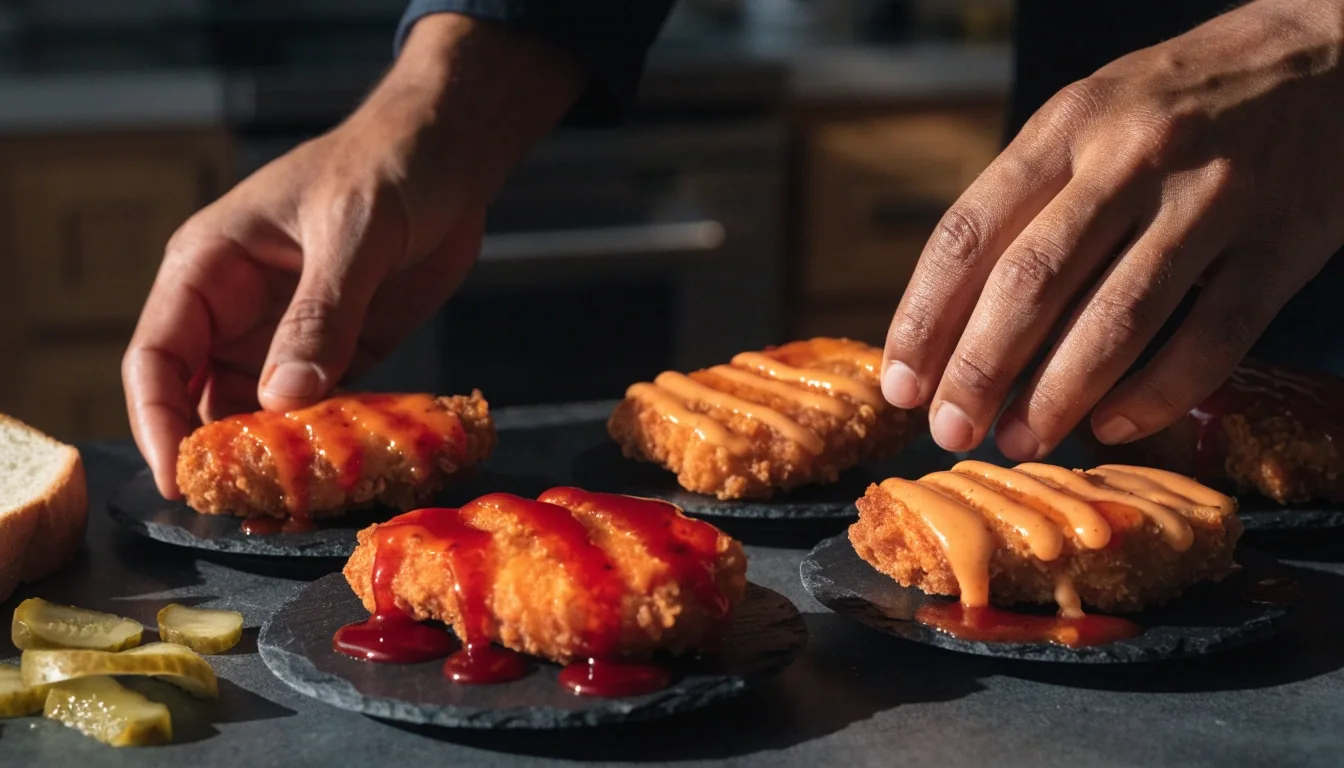
Dave's heat scale, as he plates it
These five levels are the ones Dave teaches in the flagship course. The sauce base is the same for all of them — what changes is the chili ratio and how early the glaze goes on the fried piece. Pick the level you can finish, not the one you can survive.
Mild
Warm spice on the finish. Kids and heat-shy guests eat this without reaching for milk.
Medium
A steady burn that builds through the piece and settles quickly. The everyday order.
Hot
Crisp, forward heat that hits the first bite. Dave's own default on a weeknight.
Extra Hot
Sweat-on-the-forehead heat with real chili aroma. Slows you down, in a good way.
Reaper
The top of the scale. Lingering, aggressive, no apology — and the level most people underestimate.
Full sensation notes for each step on the scale.
What you can expect from the lessons
Dave films what he actually does on the line, including the parts that go wrong. The course keeps those moments in because that is where the useful teaching sits.
Real timing, not edited timing
Clips run at cooking speed. When a step takes four minutes of standing over a pan, the lesson takes four minutes, so you learn what the oil sounds like at the right moment.
Equipment you already own
A cast-iron skillet, a deep saucepan, or a countertop fryer all work. Dave names the substitute for every tool in each lesson so nobody stalls on a shopping list.
Fixes for the batch that went wrong
Breading sliding off, oil dropping temperature, glaze turning bitter — each failure has a short section on what caused it and what to change next time.
Food-safety habits, kept plain
Raw and cooked never share a tray, oil is strained and stored properly, and nothing leaves the pan undercooked. Simple habits, stated once, repeated where they matter.
Good hot chicken is a habit, not a secret recipe.
Dave built this course after years of watching home cooks chase the wrong variable — usually the sauce. Get the brine and the fry right, and the heat level becomes a dial you control rather than a gamble. That is the whole approach behind Dave's Hot Chicken Academy.
Questions before you continue
Short answers to the things people ask before they sign up. If yours is not here, the contact page reaches a real inbox during working hours.
Do I need a deep fryer to follow the course?
No. Dave films the tender modules twice — once in a countertop fryer and once in a deep saucepan on a normal burner. A cast-iron skillet works for the slider and wing lessons.
How hot is the Reaper level, honestly?
It is the top of Dave's scale and it lingers. The course teaches the ratio so you can build up to it gradually, and it shows the dairy-and-bread pairing that makes it manageable rather than punishing.
Is this a restaurant franchise or a cooking course?
It is an online cooking course. You learn to cook daves chicken at home — tenders, sliders, and wings with the sauces and heat levels Dave uses in the kitchen. Nothing is shipped to you and no franchise is involved.
How long do I have access to the lessons?
Access terms are set out on the pricing page along with what each tier includes. Read them before you buy so there is no surprise later.
Start with the man, then the method
The course page walks through the lessons in order and shows what you cook in the first week. If you would rather ask something first, the inbox is open Monday to Friday, 9:00 AM to 6:00 PM, and Saturday, 10:00 AM to 4:00 PM.
Where the course is based
Dave's Hot Chicken Academy
422 Broadway, Nashville, TN 37203, United States
Monday–Friday: 9:00 AM – 6:00 PM
Saturday: 10:00 AM – 4:00 PM