
Dave's Hot Chicken Academy Dave's Hot Chicken Academy
Night-street paste wall with overlapping torn poster sheets under a raking streetlight
Flagship course · 422 Broadway, Nashville

Restaurant hot chicken, cooked at home

The flagship course walks a home cook through Nashville-style hot chicken tenders, sliders, and wings — the buttermilk soak, the seasoned dredge, the fry, and the signature sauces that carry dave's hot chicken heat from Mild all the way to Reaper.

What the course teaches, and who it is for

This course is built for home cooks who want restaurant-style fried chicken without a commercial kitchen. You get the full method for tenders, sliders, and wings: choosing and trimming poultry, building a dredge that actually clings, managing oil temperature on a home stove or countertop fryer, and mixing the sauces and heat levels that define daves chicken.

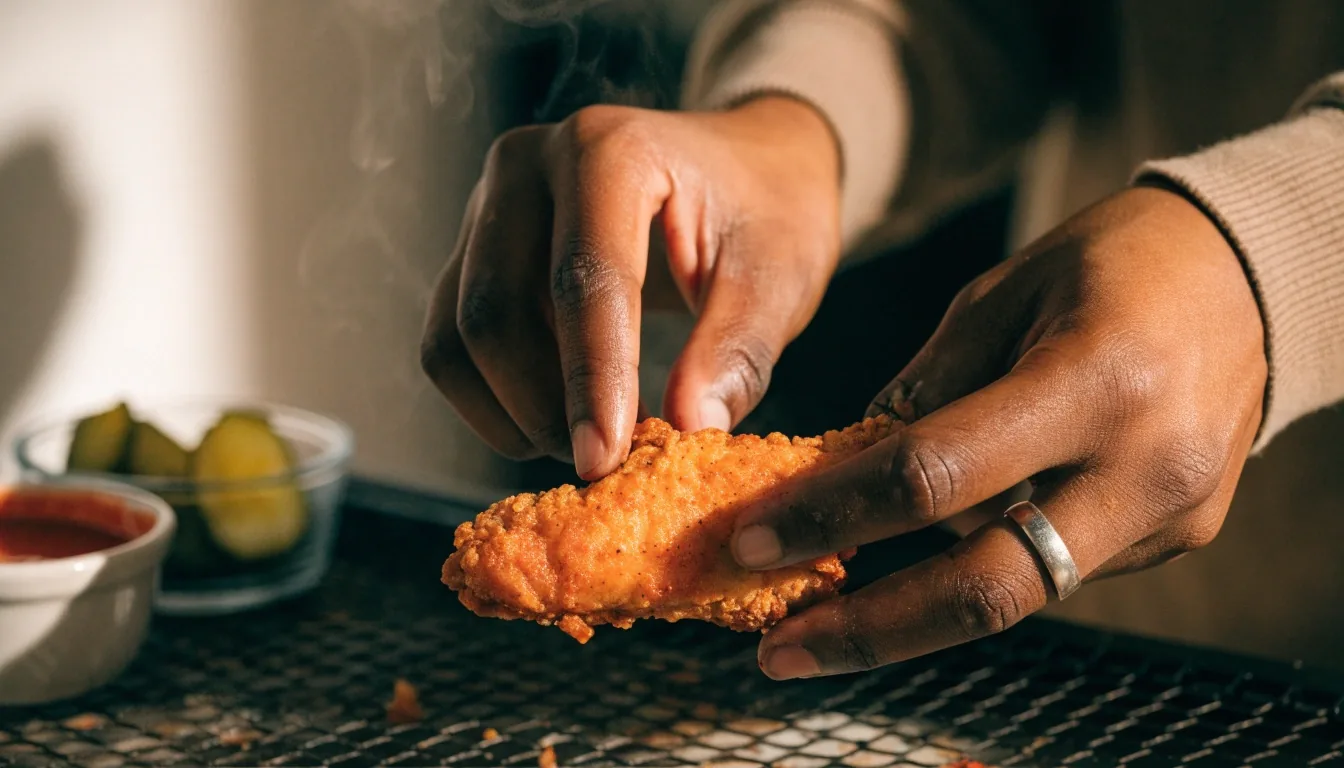
Lessons are filmed in a real home kitchen, not a studio. Every step is shown at the pan — how the crust sounds when it is ready, when the glaze should go on, and how to dial heat up or down without losing flavor. If you already cook, you will find shortcuts worth keeping; if you have never deep-fried before, the setup lesson walks you through it first.

The four working modules

Each module is filmed end to end, then broken into short lessons you can cook along with. Together they cover everything a home kitchen needs to produce hot chicken tenders, sliders, and wings that taste like the restaurant version.

Choosing and prepping poultry

How to pick thighs, breasts, and wings for hot chicken, trim them so every piece fries evenly, and cut tenders to a consistent thickness. Includes a short section on brining and the buttermilk soak that keeps the meat juicy under high heat.
Dredge and breading secrets

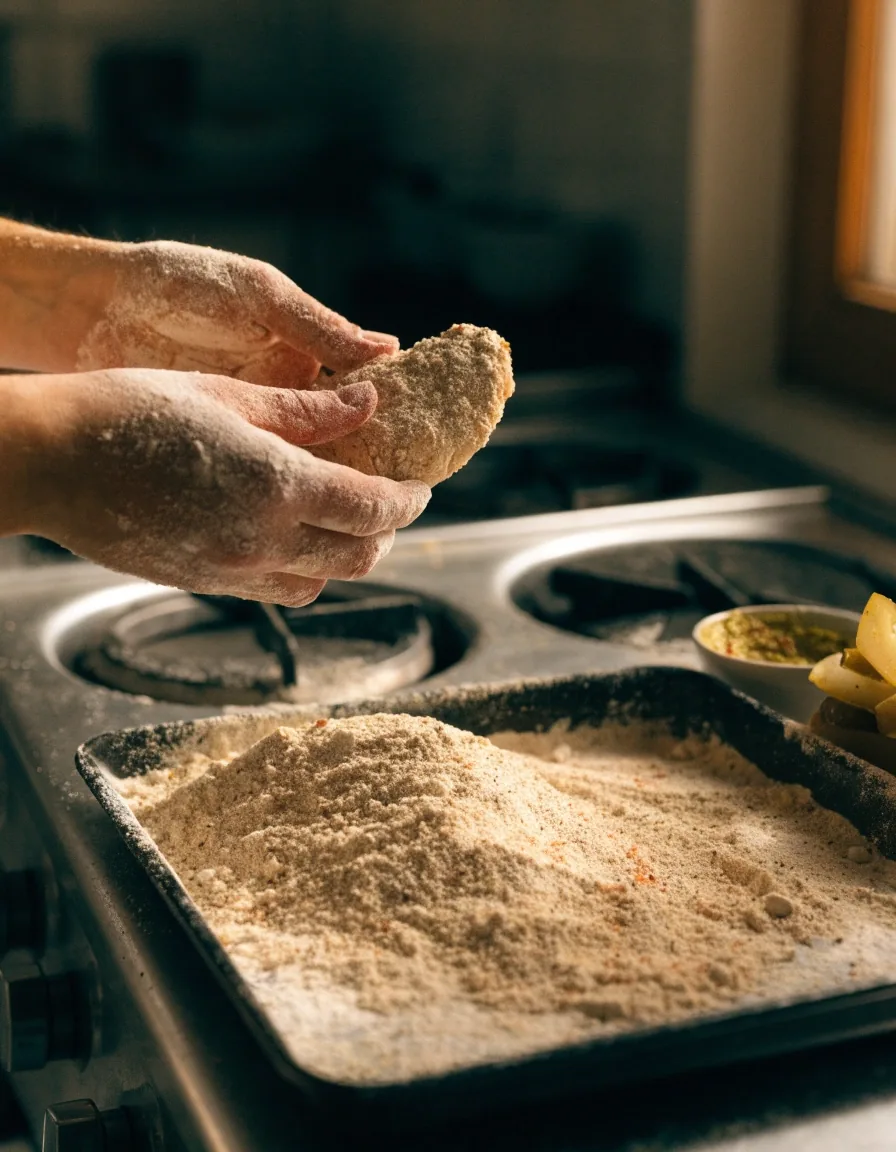
The two-stage dredge that gives dave hot chicken its shaggy, craggy crust: the wet bath, the seasoned flour mix, and the pressing technique that keeps the coating from sliding off. You will also see what happens when the flour is too fine, too coarse, or mixed too early.

Spices, sauces, and heat levels

Building the signature glaze from cayenne, brown sugar, and oil, plus the chili-mayo and honey variants. You will learn how each step of the process changes perceived heat, and how to move a batch from Mild toward Reaper without making it taste bitter or greasy.

Fryer and pan setup at home

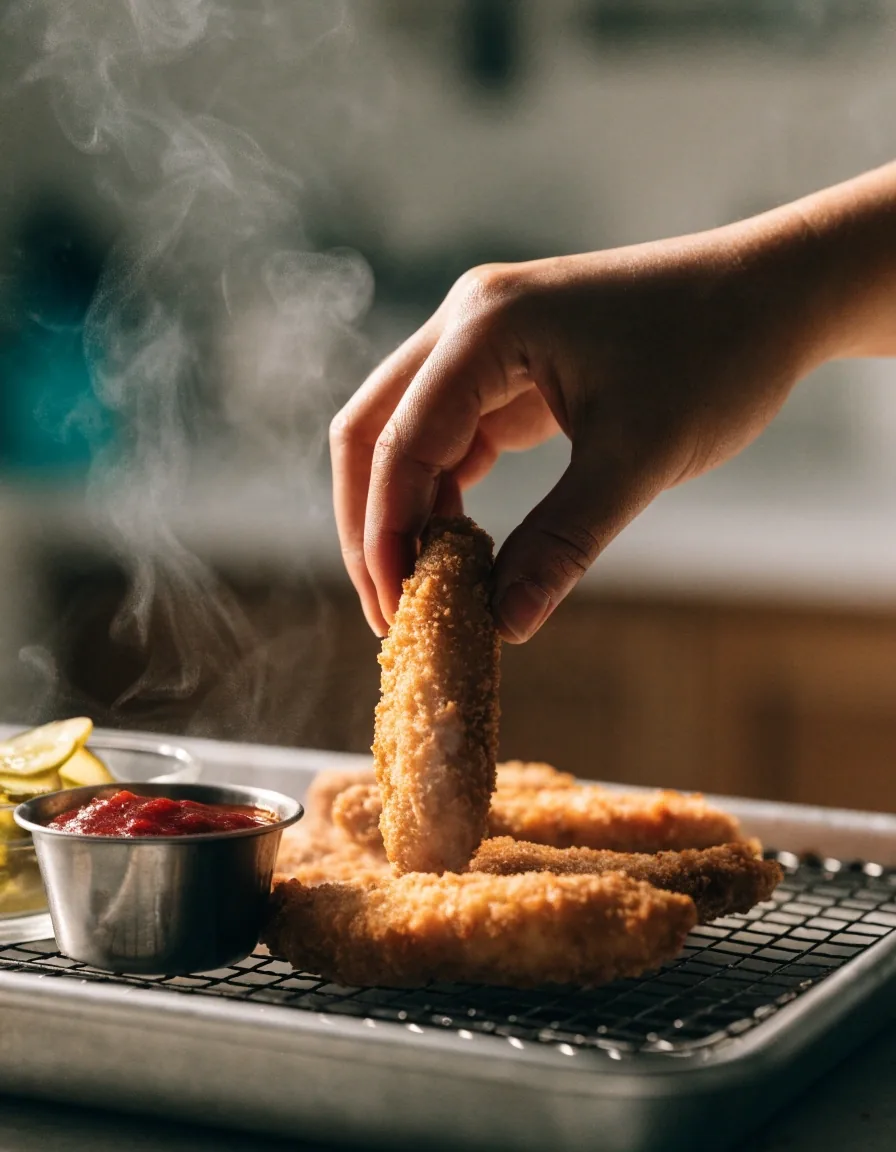
How to run a countertop fryer or a deep cast-iron pot safely, hold oil at the right temperature, fry in batches without dropping the heat, and drain on a wire rack so the crust stays crisp. Includes cleanup and oil-storage guidance.

The program page lists each module in order with what you will cook by the end of it. Open the full program.

Five heat levels, one pasted strip each

Heat is not a slider here — it is five strips on the wall. Each one describes what the bite actually feels like, so you can pick a starting level before you cook and know what to expect from daves hot chicken heat at the top end.

Mild

Warm spice on the finish. Kid-friendly, sauce-forward, no burn.

Medium

Even tingle across the lips. Noticeable, easy to finish a plate.

Hot

Bite builds through the crust, settles at the back of the throat.

Extra Hot

Sharp, quick heat that lingers. Pickle chips and white bread help.

Reaper

Over-pasted on the old recipe. Full-body heat, slow build, long tail.

The course shows how to mix one base glaze and adjust it batch by batch, so a single jar can cover the whole table without cooking two separate recipes.

Compare heat levels in detail
Stack of glazed crispy chicken tenders on dark slate with pickle chips

Try it before you buy

Classic crispy strips

A stripped-down version of the course dredge using pantry flour and a single spice blend. It is the fastest way to see how the two-stage coating behaves in your own pan before you commit to the full program.

Read the free recipe

Homemade chili-mayo

Five ingredients, one bowl, no blender. This is the cooling base the course uses under every heat level, and the sauce that keeps a Reaper plate edible.

Get the chili-mayo recipe

Juicy marinade

Buttermilk, hot sauce, and salt — and how long each cut can sit in it before the texture changes. The same soak the course builds on.

Get the marinade recipe
Gloved hands dredging a chicken tender through seasoned flour on a dark counter

Your instructor

Dave cooks hot chicken the way a home kitchen allows

Dave has spent years frying Nashville-style chicken in small kitchens, then rebuilding those same recipes on a four-burner stove for people who do not own a commercial fryer. His approach is straightforward: pick the right cut, control the oil, and let the glaze do the rest. Nothing in the course needs an ingredient you cannot buy at a normal grocery store.

He teaches the same heat scale he cooks with, from Mild through Reaper, and shows where each step in the process changes how hot the finished bite feels. The lessons are filmed in real time, including the parts that go wrong — flour that clumps, oil that drops too far, a glaze that splits — because those are the moments a recipe card never explains.

More about Dave

Course access

Three ways to take the course. Every tier covers the same four modules; the difference is how long you keep access and what extras come with it.

Taster

Single season

One full run through the four modules, plus the free recipe pack. Good if you want to test the method before committing to a longer pass.

  • All four course modules
  • Free recipe pack
  • Access for one season
See taster details

Full course

Lifetime access

The flagship tier. Keep every lesson, every update, and the full heat-level workbook. This is the option most home cooks choose once they have cooked the free strip recipe.

  • All four course modules
  • Heat-level workbook, Mild to Reaper
  • Lifetime access and future updates
  • Priority replies from the course team
See full course details

Group session

Bring a friend

Full course access for two, plus a live cook-along session. Built for couples, roommates, or a small group who want to cook the same batch together.

  • Two full-course seats
  • Live cook-along session
  • Shared heat-level workbook
See group details

Prices, current discounts, and what each tier includes are listed on the pricing page. Compare all course access options.

Every sheet on this wall is a batch that got pasted over by a hotter one. The course teaches you to make both.

Dave's Hot Chicken Academy · 422 Broadway, Nashville, TN 37203

Questions before you start

Still deciding? Reach the course team at contact or call +1-615-555-0192, Monday to Friday 9:00 AM – 6:00 PM, Saturday 10:00 AM – 4:00 PM.

Do I need a deep fryer to take this course?

No. One module covers both a countertop fryer and a deep cast-iron pot on a normal stove. You will need a thermometer and a wire rack, but nothing you would not already use for other fried food.

How hot does the Reaper level actually get?

Reaper is the top of the five-strip scale: a full-body heat that builds slowly and lingers. The course shows how to dial the same glaze down to Mild or up to Reaper, so you can cook one batch for the table and still keep the hottest pieces separate.

Is this the same chicken sold at the Nashville restaurant?

The course teaches the Nashville hot chicken style — the dredge, the glaze, and the heat scale — rebuilt for a home kitchen. It is not an official restaurant recipe, and it is not affiliated with any restaurant chain. Think of it as the method, tuned for a four-burner stove.

How long do the lessons take to work through?

Most cooks finish the four modules across a few weekends, cooking one batch per session. You can also work through them in a single long weekend if you already fry often. Access timing depends on which tier you pick.

Can I try a recipe before buying the course?

Yes. The free recipes page has the classic crispy strips, the chili-mayo, and the buttermilk marinade — the same building blocks the course uses. Cook one of those first, then decide whether the full program fits how you want to cook.

Ready to cook your first Nashville batch?

Start with the free crispy strip recipe, then take the full course when you want the sauces, the sliders, the wings, and the whole heat scale. Course access and current discounts are on the pricing page.