
Dave's Hot Chicken Academy · Nashville, TN
From whole bird to the fry basket
The full module map of the flagship course: choosing poultry, building the dredge, working the spice blend, running a home fryer without wrecking the crust. Eight modules, one path, no filler.
How the course is built
A path you can actually cook through
Each module is filmed in a home kitchen, not a restaurant line. You follow the same order Dave uses when he teaches in person: pick the bird, break it down, marinate, dredge, fry, then tune the heat. Nothing is shown out of sequence, so the first batch you cook already tastes like the last one.
8
modules, each with its own filmed walkthrough and written notes
5
heat levels taught, from Mild through Reaper, with the sauce math for each
1
home fryer or a cast-iron pan — the course works with either setup
Module 1 — Choosing the bird
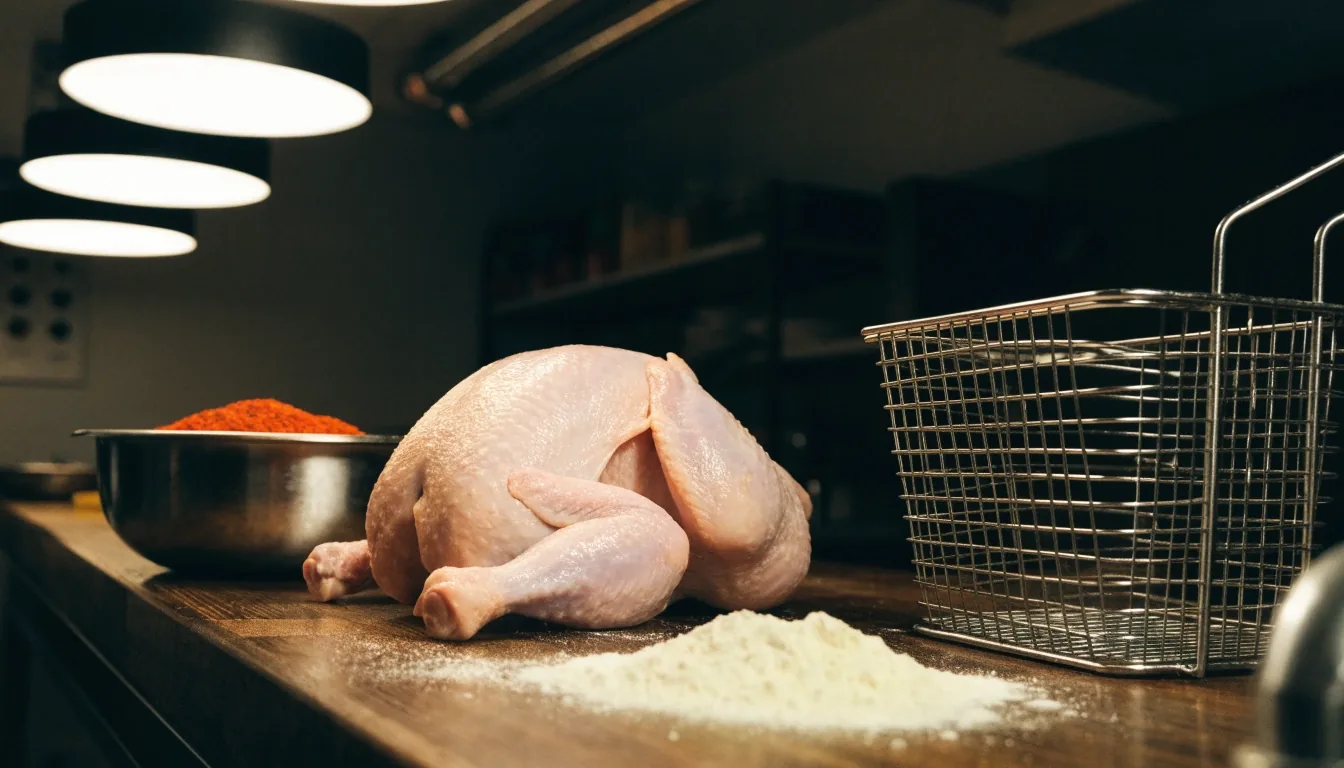
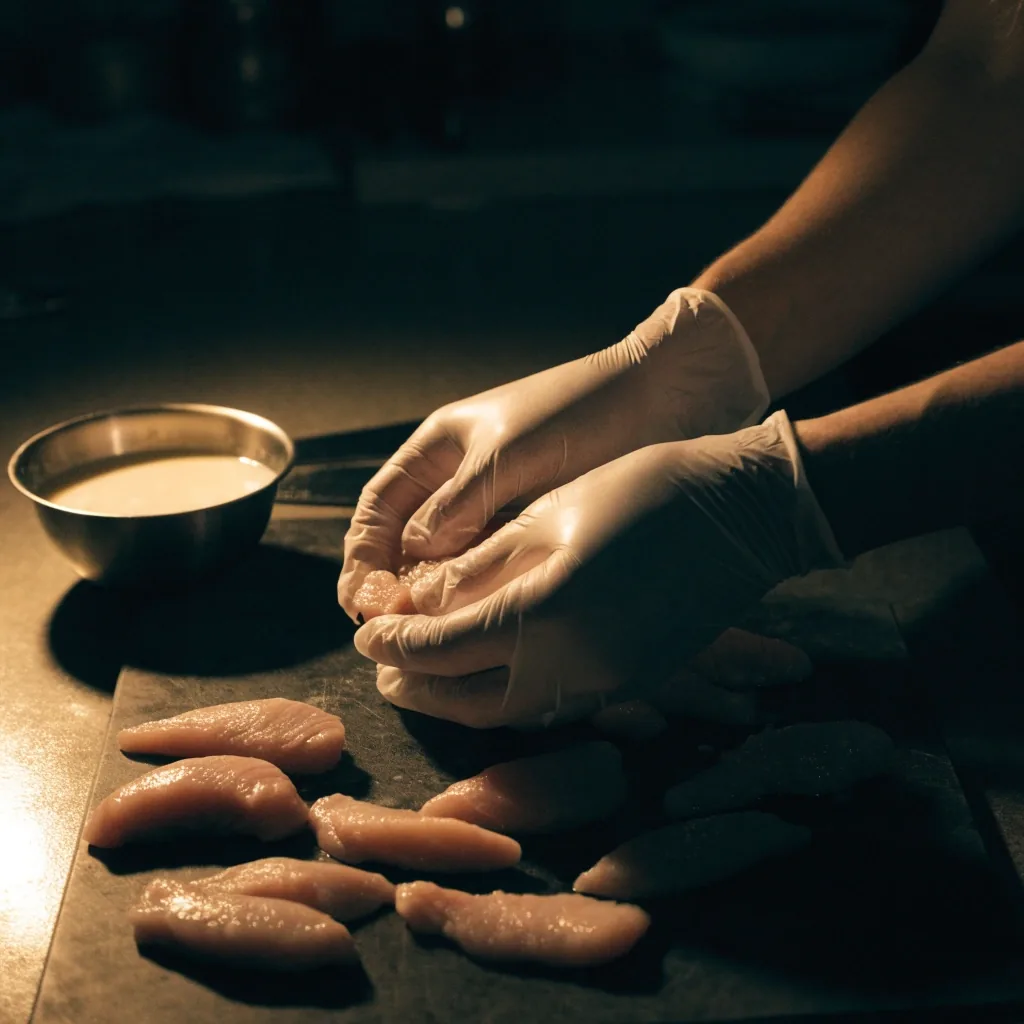
You start at the counter, not the stove. Dave walks through how to read a pack of chicken tenders: thickness, color, and the difference between a tender that fries evenly and one that goes rubbery in the oil. The module covers whole-bird breakdown for anyone who wants to cut their own tenders and wings, plus what to ask for at a butcher counter when the case is thin.
You finish this module with a shopping list and a plan for how much to buy for a single batch, a family dinner, or a small party. No guesswork on quantity.
- Reading tenderness and thickness before you buy
- Whole-bird breakdown for tenders, wings, and sliders
- Batch sizing for two, four, or eight eaters
Module 2 — The dredge and the crust
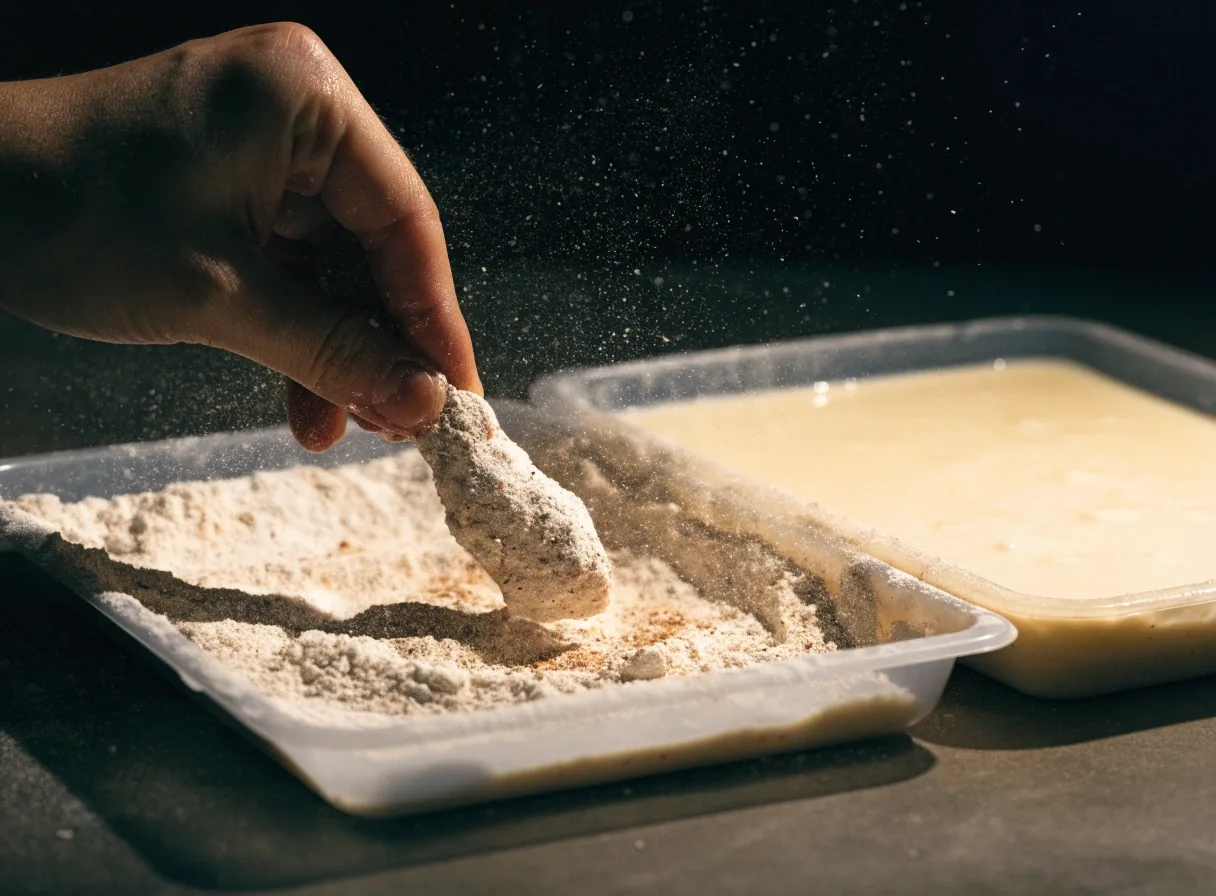
This is the module most people sign up for. Dave breaks the dredge into three stages: the wet soak, the seasoned flour mix, and the rest before frying. You learn why a second pass through the flour makes a shaggier crust, why the rest step matters more than the flour blend, and how to keep the coating stuck through the whole fry.
The lesson also covers what changes when you scale up — bigger batches behave differently, and the module shows where to adjust.
Module 3 — Spice work and heat levels
The spice blend is where dave's hot chicken gets its signature. This module shows how the blend is layered — a base coat in the flour, a finishing dust, and a glaze for the hottest levels — so you can dial the same recipe from a gentle warm through to Reaper without losing flavor. You build the blend once and keep it in a jar for the rest of the course.
Mild and Medium
A rounded, paprika-forward warmth with a slow finish. Good for a first batch and for anyone at the table who wants flavor without the burn.
Hot and Extra Hot
The cayenne and chile-de-árbol layer comes forward. Dave shows how to keep the crust crisp under a heavier glaze instead of letting it go soggy.
Reaper
The top of the scale. Concentrated heat oil, a short rest, and a fast finish so the flavor stays layered instead of just painful. Full safety notes are included.
Module 4 — Home frying setup
You don't need a restaurant fryer to make daves chicken at home. This module covers two setups in detail: a countertop deep fryer and a heavy cast-iron pan or dutch oven with a thermometer. Each one gets its own lesson on oil choice, target temperature, batch size, and how to keep the oil clean between rounds.
Safety is built into this module — not bolted on. You learn how to handle hot oil around kids and pets, what to do if oil smokes, and how to cool and store used oil for a second fry day.
Countertop fryer
Best for small batches and repeat cooks. Module covers dialing in the thermostat and skimming between rounds.
Cast-iron pan
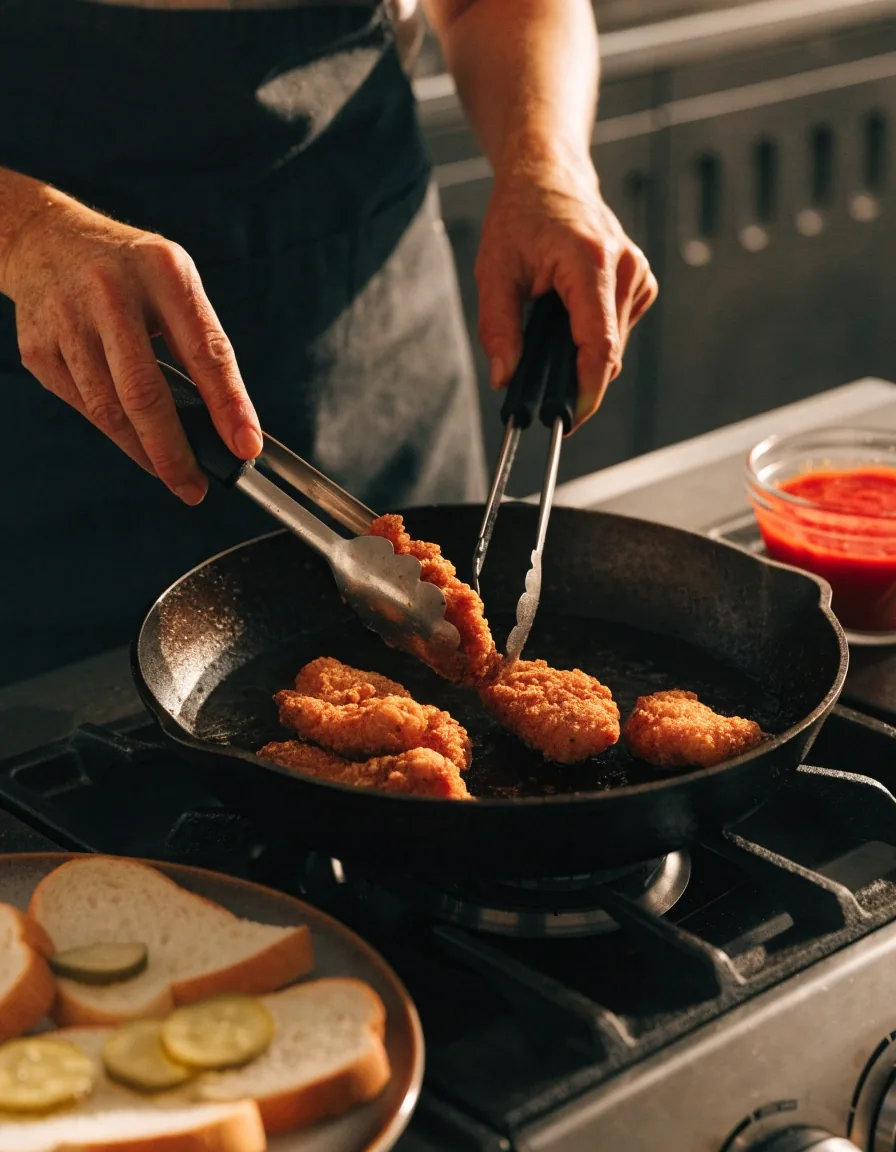
The classic shallow-fry method. Includes how to read the oil by eye and by thermometer before the first tender goes in.
Dutch oven
Deep enough for full submersion. Covers how to hold temperature when you add a cold batch and how to fry in two rounds.
Oil and cleanup
Which oils hold up to a hot fry, when to change the oil, and how to cool and strain it without making a mess.
Modules 5 through 8 — From tenders to the full plate
The second half of the course takes the same base techniques and pushes them into the dishes people actually order: sliders, wings, and the sides that hold the plate together. Each module builds on the crust and spice work from earlier, so nothing is taught twice.
Module 5 — Sliders and buns
Tender size, bun choice, pickle placement, and the sauce ratio that keeps a slider from going soggy before it hits the table.
Module 6 — Wings done right
Split flats and drums, brine timing, and why a wing needs a longer fry than a tender even though the coating looks the same.
Module 7 — Signature sauces
Chili-mayo, hot honey, and the cream-based cooling sauce. Each one gets a base recipe plus a variation note for making it hotter or milder.
Module 8 — Plating and sides
White bread, pickle chips, slaw, and how to plate a full Nashville-style hot chicken spread so everything lands hot at the same time.
Who teaches it
Dave cooks the whole course with you
The course is taught by Dave, the cook behind Dave's Hot Chicken Academy in Nashville. He has spent years working the fry basket at home and in small kitchens, and the modules show the version of the recipe he actually cooks — not a restaurant-scaled one that needs equipment you don't have.
Every module was filmed in a home kitchen with the same gear the course recommends. If Dave changes his oil or swaps a pan, the module says so on camera. If a step is fussy, he tells you which parts to skip when you're cooking for a weeknight instead of a crowd.
What you walk away with
By the end of the program, you can cook a full dave hot chicken plate at home: tenders, sliders, or wings, with a sauce you built yourself and a heat level you chose on purpose. You'll also have a spice blend you can keep in a jar, a fry setup you trust, and a written version of every module so you don't have to rewatch the videos to cook from memory.
The technique
- Reading a tender and a wing before you buy
- Building a dredge that holds its crust
- Running a home fryer without burning the oil
The pantry
- A spice blend you built and can repeat
- Three signature sauces and their hotter variations
- Written notes for every module, so you can cook without the video
Questions before you start
Do I need a deep fryer to follow the program?
No. Module 4 covers three setups — countertop fryer, cast-iron pan, and dutch oven — and the rest of the course works with any of them. If you only have a pan, you can still cook every recipe in the program.
How long does it take to cook through the whole course?
Most people finish in three to four weeks if they cook one module per week. You can also binge the videos in a weekend and then cook from the written notes at your own pace. Access doesn't expire on a timer.
Is the Reaper level dangerous to cook?
Reaper is hot, and the module treats it that way. It covers gloves, ventilation, and keeping the hot oil separate from the rest of the prep. If you don't want to cook Reaper, the rest of the course works without it.
What's the difference between this program page and the course page?
This page walks through every module so you can see the full learning path before you commit. The course page covers the format, what's included, and how to get started. If you already know the modules are what you want, head straight to pricing.
Ready to cook the whole path?
See the tier that fits how you cook, or start with the free recipes if you want to try the crust before you commit. Either way, you leave with something on the plate.
Dave's Hot Chicken Academy · 422 Broadway, Nashville, TN 37203 · +1-615-555-0192 · [email protected] · Mon–Fri 9:00 AM–6:00 PM, Sat 10:00 AM–4:00 PM